
Sub-Total: $0.00
Velflex claims ‘DTF is all grown up’
27 October 2026
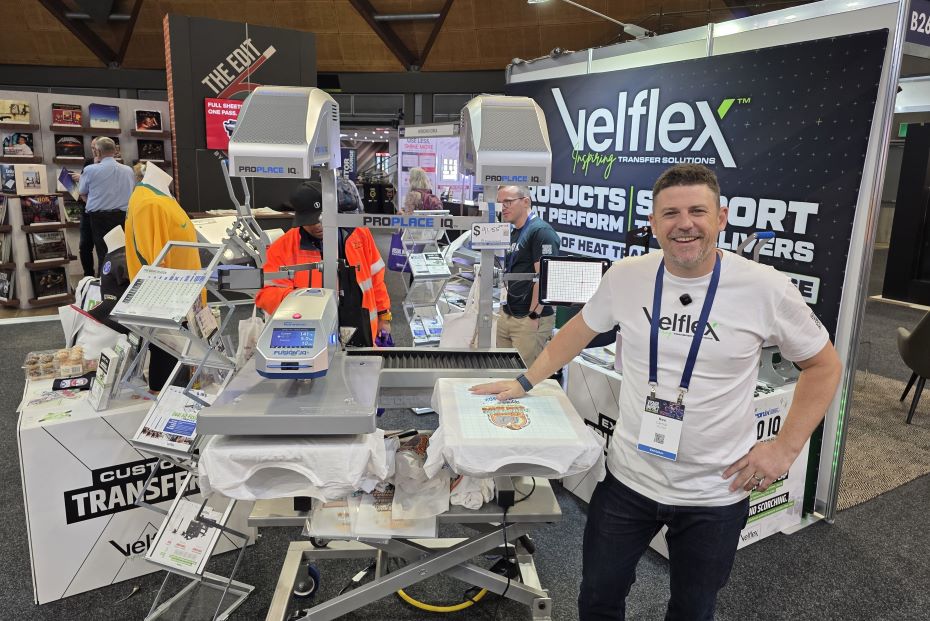
Ben Carroll, Managing Director of Velflex, has watched direct-to-film printing move from a volatile new technology to a dependable part of the garment decoration toolkit. Now, Carroll reveals in the latest issue of Digital Image Magazine, that he feels that ‘DTF technology is all grown up’.
Carroll says: “In the early days, there were a lot of products and options out of China, but the quality of print just wasn’t there and the machines were not where they needed to be when it came to repeatability of colour and quality.”
“But latterly, the larger OEM brands, in particular the well-respected technology coming out of Japan, have got involved and steadily standardised the production quality, to the point now where the majority of available products deliver exceptional, reliable quality. Trusted partners also offering local, hands-on technical support. This is a real maturing of DTF and it’s been great to see.”
The implications go beyond reliability. As the technology has matured, the business case for DTF has become easier to understand, particularly for sign and print companies looking to add garment decoration without making it their core operation.
Lower equipment costs and more reliable machinery are widening the potential customer base. DTF can now sit alongside an existing print operation rather than requiring a business to reinvent itself around garment decoration. Carroll adds: “It’s a product stream now that you can now turn to every second or third day: you don’t have to manage and keep it running every day.”
For Velflex, there are now two clear routes to market: become a decorator and outsource the transfers, or move further upstream and produce them in-house. Carroll says Velflex supports both. Customers can start with a heat press and buy ready-to-press transfers, with service and turnaround becoming key differentiators. Those who eventually want to become transfer printers can be supplied with the machinery, consumables and technical know-how to replicate our own production process.
Carroll adds: “It’s no longer about who has the best print technology: that discussion has matured. It’s now about your internal processes, reducing human labour cost, and trying to get more decorated units out every hour.”
This marks an important change in the DTF conversation. The competitive advantage is shifting away from simply having the newest printer and towards having a production workflow that is repeatable, efficient and consistent.
To read the full article in the October issue of Digital Image Magazine click here


