Sub-Total: $0.00
Avery Dennison TREAD firmly in tyre labelling
17 November 2026
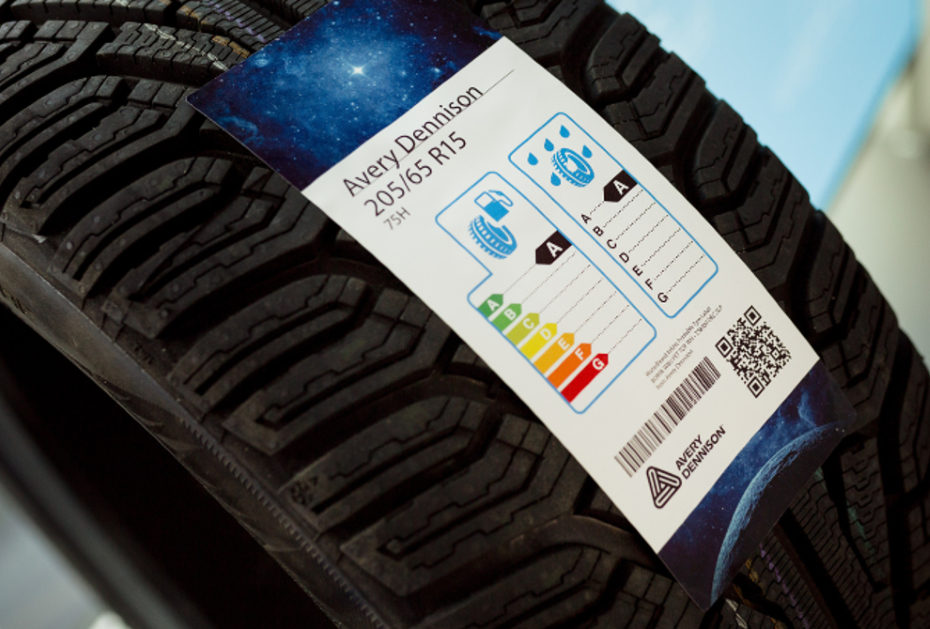
Responding to the TREAD Act (Transportation Recall Enhancement, Accountability, and Documentation Act), which is essentially a mandate for improved labelling of tyres to assist consumers in identifying tyres that may be subject to a recall, Avery Dennison has developed numerous solutions to assist converters and brands.
According to Avery Dennison, nearly every one of the 2.5 billion tyres produced annually on a worldwide scale will carry at least one label, ‘but this is no easy task, as tyres are among the most demanding surfaces to label due to their heavily textured, chemically active rubber’. The UTQG (Uniform Tire Quality Grading) standard was developed to help consumers compare tyres based on treadwear, traction, and temperature resistance, effectively stating that the labels must be legible and permanent until the consumer purchases the tyre.
To form a lasting bond, labels need a high-tack, aggressive adhesive that is thick enough to flow into the tread grooves. The face-stock must also be flexible enough to bend with the rubber without lifting at the edges. Transport adds further challenges, including extreme temperatures, humidity, and abrasion from handling. Once tyres reach the store, dirty, creased, or curled labels can drive shoppers elsewhere, and missing labels mean lost profits.
For tread label applications, Avery Dennison offers a portfolio of constructions designed for both hand-applied and auto-dispensed methods, which provide durability with resistance to staining and abrasion and are print-receptive with multiple ink/ribbon technologies for graphics that are legible and scannable. The company’s rubber-friendly adhesives have high coat weights for rough, low energy surfaces, giving excellent adhesion but allowing clean label removal.
Achieving reliable RFID performance on high dielectric materials like tyres is notoriously difficult, however, so Avery Dennison has recently designed its next-generation AD Grip NEL M830 FCC inlays to overcome this challenge. The inlays deliver consistent read performance and traceability across a wide range of tyre types. Built with a Narrow Edge Leading (NEL) design, the AD Grip NEL M830 FCC has been optimised for placement beneath standard 3” tread labels and supports tyre stacking and related workflows.
Recent demand has also come from the retread tyre market, too, which is growing, primarily due to the cost savings for fleets and corporate sustainability targets, According to Avery Dennison, ‘re-treaded tyres can cost 30% to 50% less than comparable new tyres and use significantly fewer raw materials and energy, and advancements in re-treading processes have largely closed the performance gap between re-treads and new tyres’.
Avery Dennison has also recently launched a new vulcanised label material with a special cross-linking adhesive, suitable for the operating window of temperature and pressure of the vulcanising process. The company claims that ‘this new material has good barcode printability for lifetime legibility, with no yellowing or shrinkage, and can easily be auto-dispensed, also featuring superior chemical and abrasion resistance, maintaining traceability throughout the supply chain’.