Sub-Total: $0.00
Avery Dennison non-PVC film helps ‘drive’ sustainable change for RAA
30 December 2025
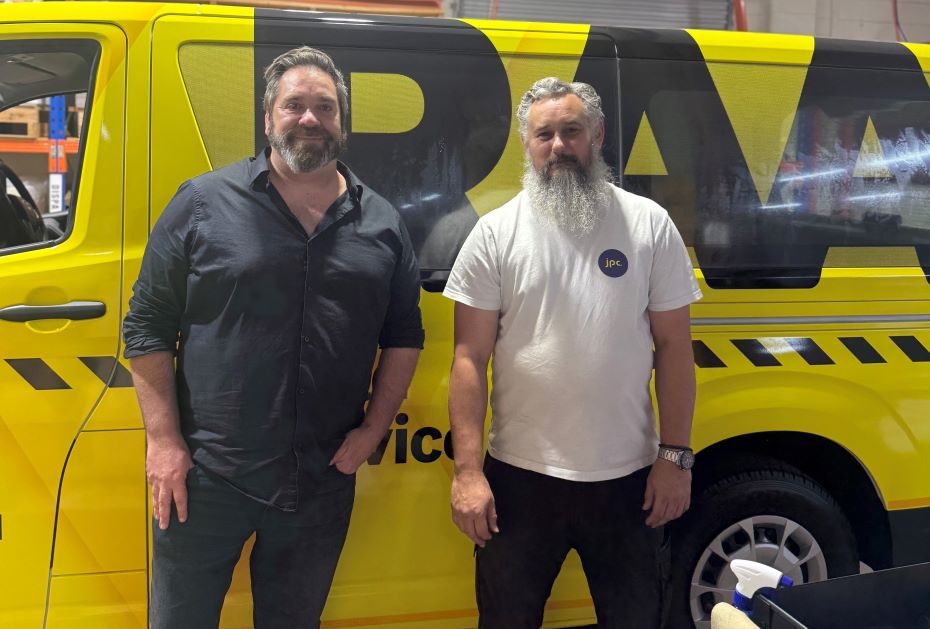
Leading South Australian specialist print and signage company, John’s Print Centre (JPC) recently put forward Avery Dennison’s non-PVC SP 1504 Easy Apply RS™ film as the preferred solution for an RAA service vehicle livery contract tender process.
JPC GM, Daniel Woodward, says: “The environmental component of this opportunity was key. From day one, we made it clear to RAA that we would propose a non-PVC route using Avery Dennison’s SP 1504 film, rather than defaulting to the incumbent 1105 film.”
“We worked with our suppliers, Spandex, to develop carbon-footprint comparisons, and we positioned that distinctive value in our tender.”
Jon Keppell, Commercial Manager Avery Dennison Graphic Solutions, adds: “The beauty of the new SP 1504 film is that it doesn’t ask installers to compromise. You get the conformability and finish of a premium cast wrap, without the PVC baggage. For clients who are really starting to drive their ESG targets, that makes this solution an all-round win-win.”
Part of the fabric of South Australian society
With a history that dates back to 1903 and a member base that now sits at over 830,000, few Australian organisations can lay claim to being truly ‘institutional’. But RAA is a part of the South Australian social fabric: its Roadside Assistance vehicles enjoy a brand recognition that is synonymous with customer support and a keen sense of responsibility to their members, to their community and, by extension, to the environment.
Noting this, RAA’s latest tender for the ongoing Vehicle Livery panel of its substantial fleet, did include Sustainability as one of its evaluation criterion.
Enter John’s Print Centre…blowing its own ‘industry-leading, well-respected across Adelaide and South Australia, known for exceptional quality and service’ horn. Through its pre-existing relationship with Spandex, JPC leant comfortably into its established relationship with multinational manufacturer and distributor of pressure-sensitive adhesive materials, Avery Dennison.
Founded over four decades ago, JPC excels in large-format printing and boasts the largest and fastest UV flatbed printers in the State, to support its ambition to ‘empower brands with innovative visual solutions that inspire and captivate’.
“This constant drive – towards consistently delivering a high-quality customer experience and innovating on behalf of our customers, where there are opportunities to deliver even better results – is what helps to set us apart from our competition,” explains Woodward.
“Advocating Avery Dennison’s non-PVC SP 1504 Easy Apply RS™ film for this project is a reflection of this approach.”
Conforming to its Sustainability promise
Avery Dennison describes its SP 1504 Easy Apply RS™ film solution as a ‘next-generation PVC-free, polyurethane-blend wrapping film’. It contains no chlorine, no phthalates, and no other halogens, and significantly reduces volatile organic compound (VOC) emissions compared with conventional PVC films.
From a performance standpoint, SP 1504 offers excellent 3D conformability, air-egress channels to reduce bubbles and wrinkles, and a ‘low initial tack / easy repositioning adhesive’ that helps in installation over complex curves, corrugations, rivets, and compound bends. Its durability is rated at up to 10 years unprinted (vertical exposure) or about 6 years for printed graphics (in favourable zones) under the ICS Performance Guarantee.
Keppell acknowledges: “SP 1504 behaves a little differently from traditional cast PVC films. Its installation requires a bit more attention to detail but our comprehensive training covers all of this. And in this case, we also knew that JPC’s lead installer, Kane Schenscher, was already a certified Avery Dennison installer/trainer.”
Schenscher says: “SP 1504 has lower initial tack so its repositioning window is longer, but you often need a bit more post-heating to fully engage the adhesive, especially around rivets or compound curves. All this is very manageable, and once you’re trained and you know the tricks, it wraps beautifully. Thanks to the support and training of both Avery Dennison and Spandex, the JPC install team has quickly been able to hit high first-pass yields.”
Tender success
Talking more specifically about the success of JPC’s tender, Woodward explains: “We were able to offer statistics that confirm that the overall environmental uplift gained through using Avery Dennison’s SP 1504 in place of the MPI 1105 PVC film we would typically use to wrap fleet vehicles, is meaningful.”
“In fact, the numbers we were able to crunch with Spandex talk to as much as a 53% reduction in carbon emissions from cradle to grave. It also lowers VOC emissions during use, and supports clients, like RAA, who have an ESG procurement strategy and are working with suppliers to help reduce their emissions.”
Woodward adds that although JPC had a pre-existing relationship with RAA on the signage preferred supplier panel – ‘we also wrapped all their RAA Charge EV charging stations using Avery products’ – the emission reduction metric and other associated Sustainability criteria was one of the drivers behind their tender success…“especially because we were also able to demonstrate how this Sustainability uplift would not come at the expense of performance or cost.”
Wrapping up
Jon Keppell, adds: “For other fleet clients, government agencies or corporations with sustainability mandates, this JPC/Spandex/Avery Dennison partnership model will likely be watched closely; and we fully expect future tenders to include even more explicit requirements pertaining to the use of non-PVC products and other sustainable wrap materials.”
“We believe that Avery Dennison SP 1504 is a differentiating factor in winning or losing a contract of this size and nature, especially where end customers like RAA are placing more emphasis on carbon credentials and circular-economy thinking.”
This article first featured in the December issue of Image Magazine